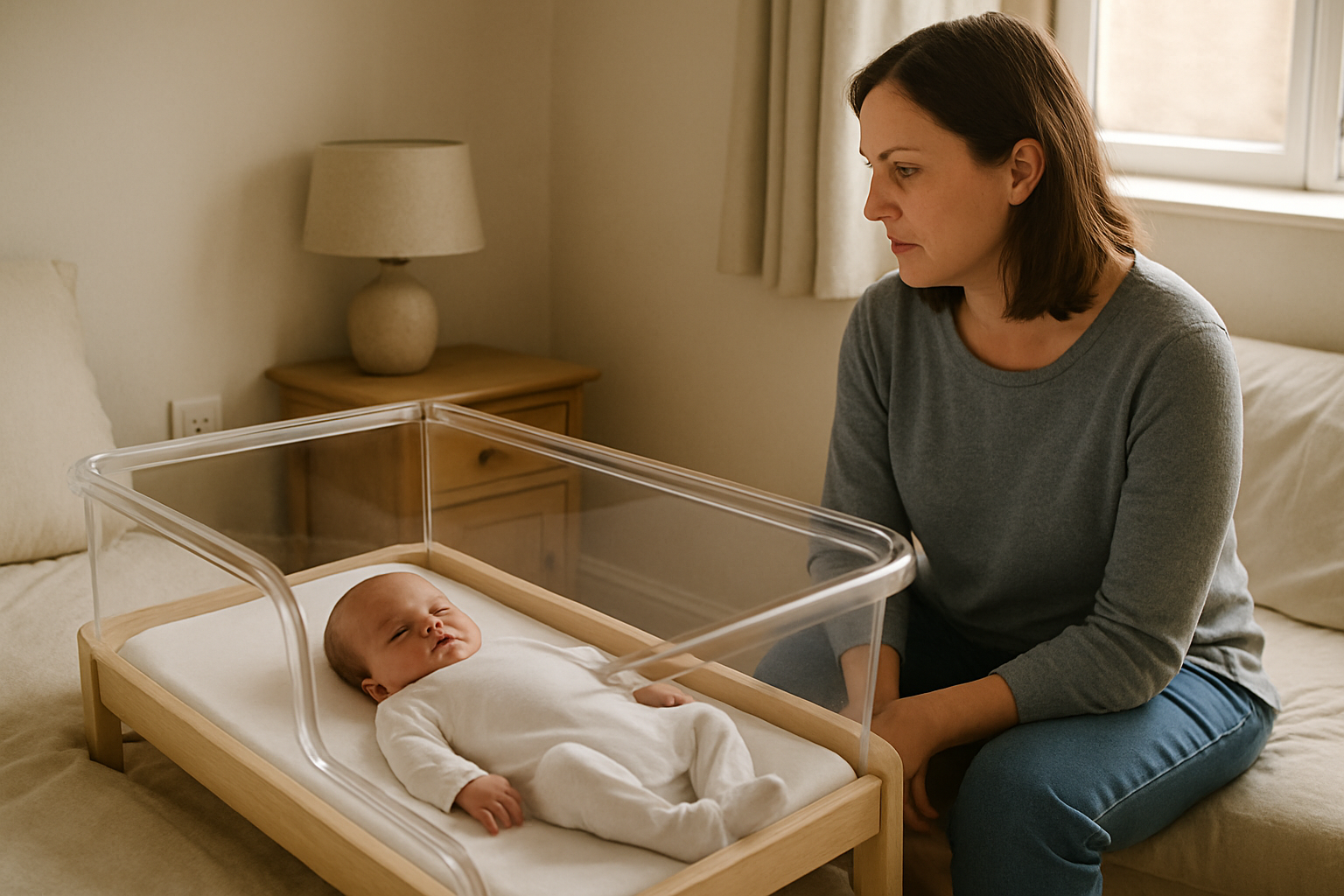
Some babies will happily nap in a cot or crib. Others seem to have a remarkably accurate internal alarm that goes off the moment they leave someone’s arms.
If your baby naps beautifully while being held but wakes when you put them down, you are far from alone. Contact naps are common in early infancy, particularly during the newborn months.
They can also bring mixed feelings. You may enjoy the closeness while simultaneously wondering when you are supposed to eat lunch, have a shower or simply move your arm.
Understanding why contact naps happen, and how to approach them safely, can take some of the pressure out of this stage.
What is a contact nap?
A contact nap simply means your baby sleeps while being held or in close physical contact with a caregiver.
For a young baby, that closeness provides warmth, familiar smells, movement and the reassuring presence of another person.
It is not surprising that many babies find this easier than sleeping separately.
Are contact naps normal?
Contact napping is common during early infancy.
Babies vary enormously. Some transfer relatively easily into their own sleep space, while others wake frequently when put down.
Neither tells you very much about how they will sleep several months from now.
Sleep develops considerably during the first year, so there is little value in comparing your baby’s naps with another family’s routine.
Can contact naps create bad habits?
It is easy to worry that allowing your baby to sleep on you means they will always need to be held.
Early responsiveness does not need to be viewed as creating a bad habit.
Your baby’s sleep patterns, feeding needs and ability to settle will change as they develop. What works during the newborn stage does not have to become a permanent arrangement.
If contact naps are working safely for your household, there is no need to change them simply because someone else’s baby naps differently.
The important distinction: awake or asleep
The key safety consideration with a contact nap is the adult holding the baby.
If your baby falls asleep on you while you are awake and able to supervise them safely, that is very different from accidentally falling asleep while holding them.
If you feel yourself becoming drowsy, move your baby to their own safe sleep space.
Falling asleep with a baby on a sofa or armchair carries a particularly high risk and should be avoided.
What does a safer sleep space look like?
For sleep away from your arms, follow current NHS safer sleep guidance.
Your baby should be placed on their back in their own clear, separate sleep space with a firm, flat mattress. For the first six months, NHS guidance recommends that this sleep space is in the same room as you, day and night.
Keep it clear of pillows, duvets, cot bumpers, sleep positioners, pods, nests, toys and other loose or padded items.
The same safer sleep principles apply to daytime naps as they do overnight.
What if I need my hands back?
Enjoying contact naps does not mean you need to spend every daytime sleep sitting still.
You can gently offer your baby’s cot, crib or Moses basket for some naps and see what happens.
Sometimes the transfer will work. Sometimes your baby will wake immediately. Neither outcome needs to become a judgement on your parenting.
You might experiment with putting your baby down after they have settled, while keeping expectations realistic.
There is no single technique that guarantees a longer nap.
Do all naps need to happen in the same place?
Newborn days are rarely that orderly.
Some naps may happen in your baby’s sleep space while others happen safely in your arms while you are awake.
Rather than aiming for a perfect nap schedule, it can be more useful to focus on safe sleep and what is manageable for your household.
Patterns can evolve gradually.
What about baby carriers?
Some babies sleep while being carried in a sling or carrier.
If you use one, follow the manufacturer’s instructions carefully and make sure it is appropriate for your baby’s age and size. Your baby’s face should remain visible and unobstructed, with their airway protected and their position checked regularly.
If you are unsure about using a sling or carrier safely, seek advice from an appropriately trained professional.
Contact naps when you are exhausted
This is where the practical reality matters.
Being told that contact naps are common does not make it easier if you are running on very little sleep yourself.
If you are becoming too tired to remain awake while holding your baby, prioritise putting them into their safe sleep space.
Where possible, sharing care with a partner or another trusted adult can also give you an opportunity to rest. Help with cooking, washing or other household tasks can be valuable too.
If exhaustion is affecting your ability to care safely for yourself or your baby, speak with your health visitor, GP or another healthcare professional.
You do not need to optimise every nap
There is an enormous amount of information about baby sleep, and it can make ordinary newborn behaviour feel like something that needs solving.
Not every short nap needs extending. Not every contact nap needs stopping. And a baby waking when transferred does not mean you have done anything wrong.
In the early months, sleep is still developing.
Keep safer sleep guidance at the centre, protect your own rest where you can, and allow your baby’s patterns to evolve.
There may come a day when you realise those long, sleepy contact naps have quietly disappeared without you ever formally deciding to end them.