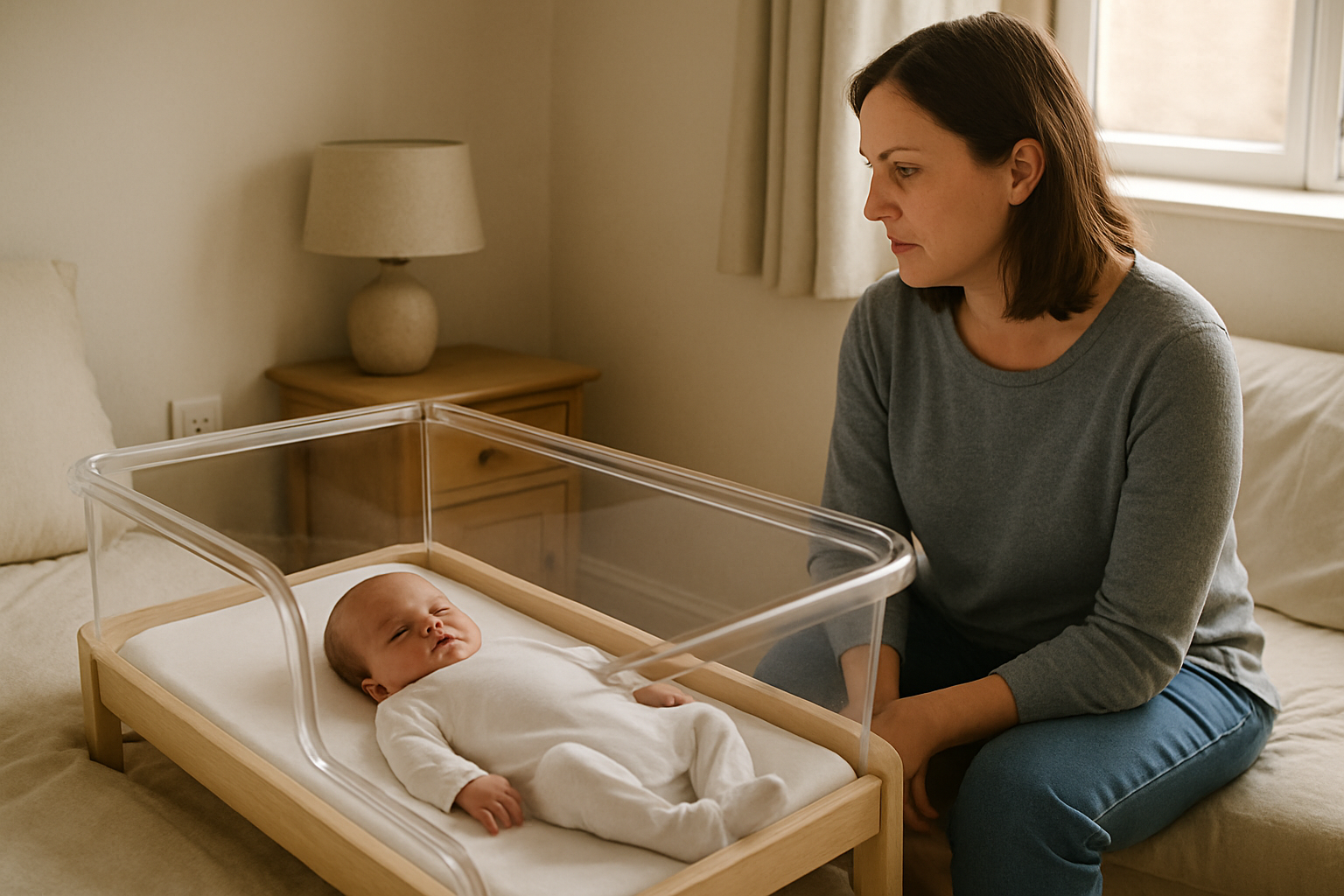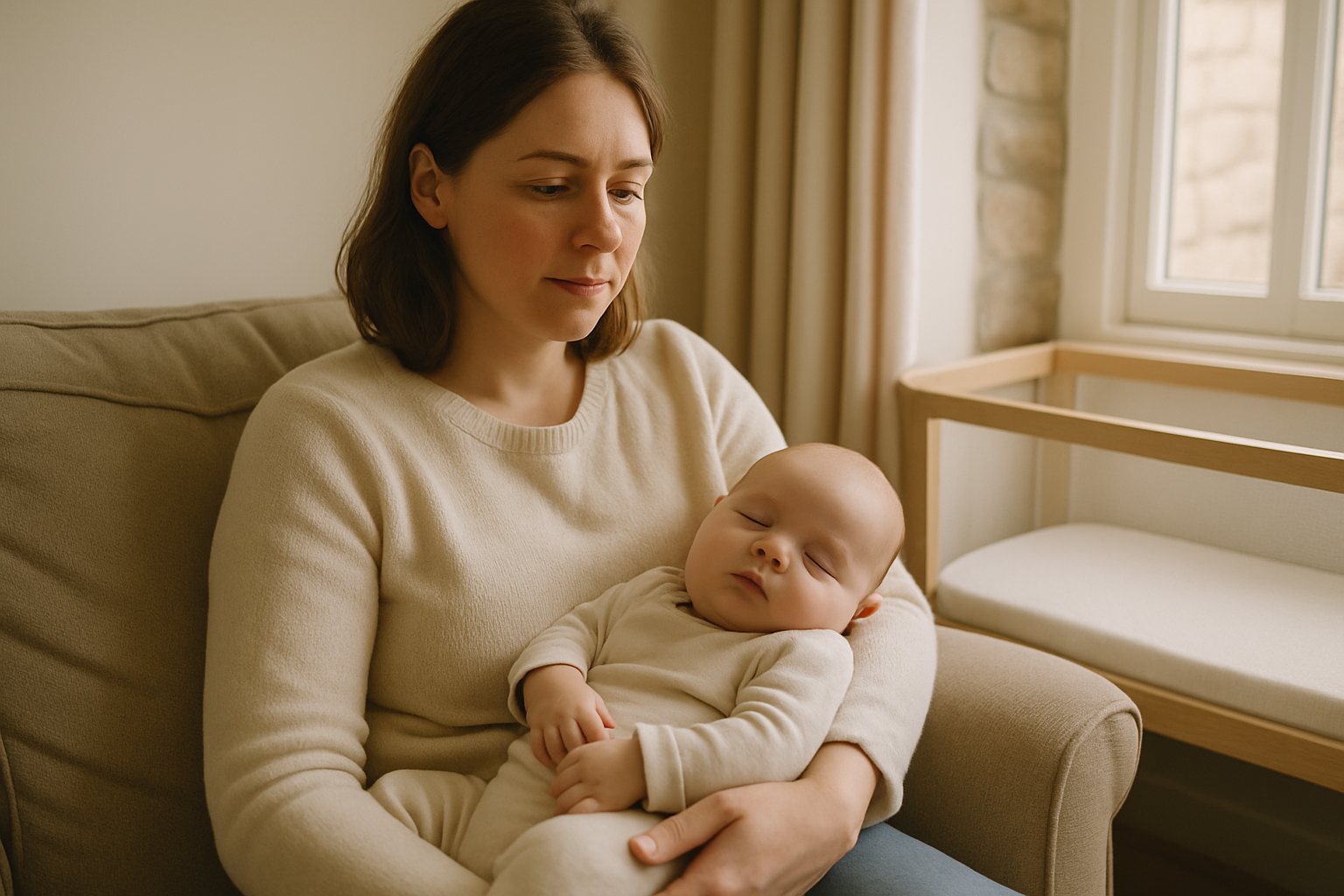
It can be surprisingly common for a newborn to sleep peacefully in your arms, only to wake soon after being put down.
When you are tired and hoping for a little rest yourself, this can feel frustrating or leave you wondering whether you have created a habit you now need to fix.
In the early months, wanting closeness is very ordinary. Understanding why contact sleep happens, while keeping safer sleep at the centre, can make this stage easier to navigate.
Why do newborns often prefer being held?
A newborn has moved from a warm, enclosed environment into a world full of unfamiliar sensations. Being held provides warmth, movement, familiar smells and the sound of a caregiver’s voice and heartbeat.
It is therefore unsurprising that many young babies settle more readily against another person than when placed down.
This preference does not mean your baby has learned a bad habit or that you have done something wrong. Early sleep patterns are still developing, and babies vary considerably in how readily they settle away from a caregiver.
Why does my baby wake when I put them down?
Moving from warm arms to a still sleep surface is a noticeable change. Your baby may also be in a lighter stage of sleep when you transfer them, or simply respond to the change in position, temperature and contact.
Sometimes a transfer works and sometimes it does not. That variation is normal in the early weeks.
There is no single transfer technique that guarantees a newborn will remain asleep.
Is contact sleep safe?
A baby can sleep while being held if the adult holding them is awake and able to supervise safely.
The risk changes if the adult becomes sleepy. If you feel yourself becoming drowsy, place your baby in their own safe sleep space.
Falling asleep with a baby on a sofa or armchair carries a particularly high risk and should be avoided.
For unsupervised sleep, follow current NHS safer sleep guidance. Place your baby on their back in their own clear, separate sleep space with a firm, flat mattress. For the first six months, their sleep space should be in the same room as you, day and night.
Keep the sleep space free from pillows, duvets, cot bumpers, sleep positioners, pods, nests, toys and loose or padded items.
Do I need to stop contact naps?
You do not necessarily need to eliminate every contact nap simply because your baby enjoys them.
The more useful question is whether the arrangement is safe and manageable for the adults caring for the baby.
If you are awake, comfortable and able to supervise, holding your sleeping baby can be part of early family life. If contact sleep is leaving you unable to rest, eat or manage other essential needs, you may want to experiment gently with putting your baby into their safe sleep space for some sleeps.
Can I help my baby settle in their crib or cot?
You can offer opportunities for your baby to sleep in their own sleep space without treating each attempt as a test.
Some parents find it useful to settle their baby and then transfer them carefully once calm or asleep. Others sometimes place their baby down when settled but awake. Neither approach works reliably for every newborn, and there is no need to force a particular method.
If your baby wakes, responding to them does not mean you have failed.
The aim in these early months is not independent sleep at all costs. It is safe, responsive care while your baby’s sleep develops.
What if I am exhausted?
This is often the most important part of the conversation.
Contact sleep can feel manageable during the day when you are alert, but repeated night waking can leave parents extremely tired.
If possible, share care with a partner or another trusted adult so that each caregiver has opportunities to rest. Practical help with meals, washing or household tasks can also free up time for sleep.
If you are struggling to stay awake while caring for your baby, or tiredness is affecting your ability to care safely for yourself or your baby, speak with your health visitor, GP or another healthcare professional for support.
What about baby nests, pods and sleep positioners?
Products that promise to make a baby feel enclosed or held can look appealing when your baby wakes repeatedly after being put down.
However, safer sleep guidance recommends a clear, flat sleep space. Pods, nests, sleep positioners, pillows and other padded products should not be used as a baby’s sleep surface.
Marketing claims or attractive photographs should not take priority over current safer sleep guidance.
Will my baby always need to be held to sleep?
Early sleep changes considerably as babies grow. A newborn’s need for closeness does not tell you exactly how they will sleep several months from now.
There is no need to predict or solve all future sleep from what is happening today.
As your baby develops, their sleep cycles, feeding patterns and ability to settle will change too.
A realistic way to approach contact sleep
Contact sleep is common in early infancy, and it can be both comforting and demanding.
You do not have to choose between responding to your baby and encouraging safe sleep away from your arms. Both can exist within the same day.
Enjoy the cuddles when they work for you, offer your baby’s own sleep space when appropriate, and keep safer sleep guidance at the centre of every decision.
If you have concerns about your baby’s sleep, feeding, breathing, alertness or general wellbeing, contact your midwife, health visitor, GP, NHS 111 or another appropriate healthcare service.
For now, your baby’s preference for closeness is not a verdict on your parenting or a problem that must immediately be fixed. It is one part of a rapidly changing newborn stage.